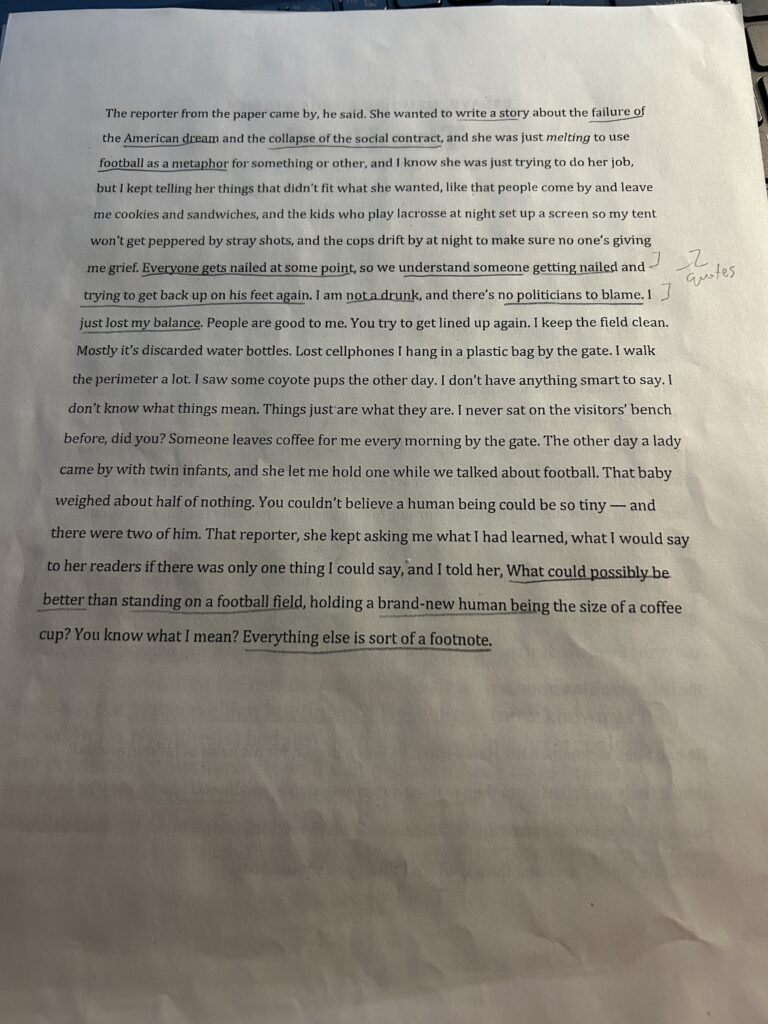
My reading responses as well as my note annotations for “The Hawk” reading and up until “The Limits of Friendship” reading have undergone some minor as well as some major changes. The first annotations for “The Hawk” reading weren’t very organized and were done after reading the full passage. I underlined sentences and parts of the text that seemed important but didn’t connect to any themes or ideas of the overall passage or my interpretation. As seen in the image below, my annotations from “The Hawk” were very basic and lacked any detail or explanations for their importance. For example one of the sentences the annotation or underlined part was this sentence from the reading “everyone gets nailed at some point, so we understand someone getting nailed and trying to get back up on his feet again” (Doyle 2). Comparing this annotation to a more recent, more detailed annotation from the “Limits of Friendship” reading which was “people have started challenging the continued relevance of Dunbar’s number” (Konnikova 3). The “Limits of Friendship” quote that I annotated was pointing out a part of the reading where the author was challenging a psychologist’s view with her own. Where as my annotation from the “The Hawk” was just a piece of dialogue that stood out to me from the text. Not only did my early annotations not have any explanations but they weren’t grouped into categories based on different types of information throughout the text. This made the notes harder to use in later assignments and harder to connect my own interpretation of the text. My annotations and notes for the hawk were more just surface level and things that stood out to me in the moment. These notes weren’t very deep and didn’t connect to any overall theme or big picture of the text.
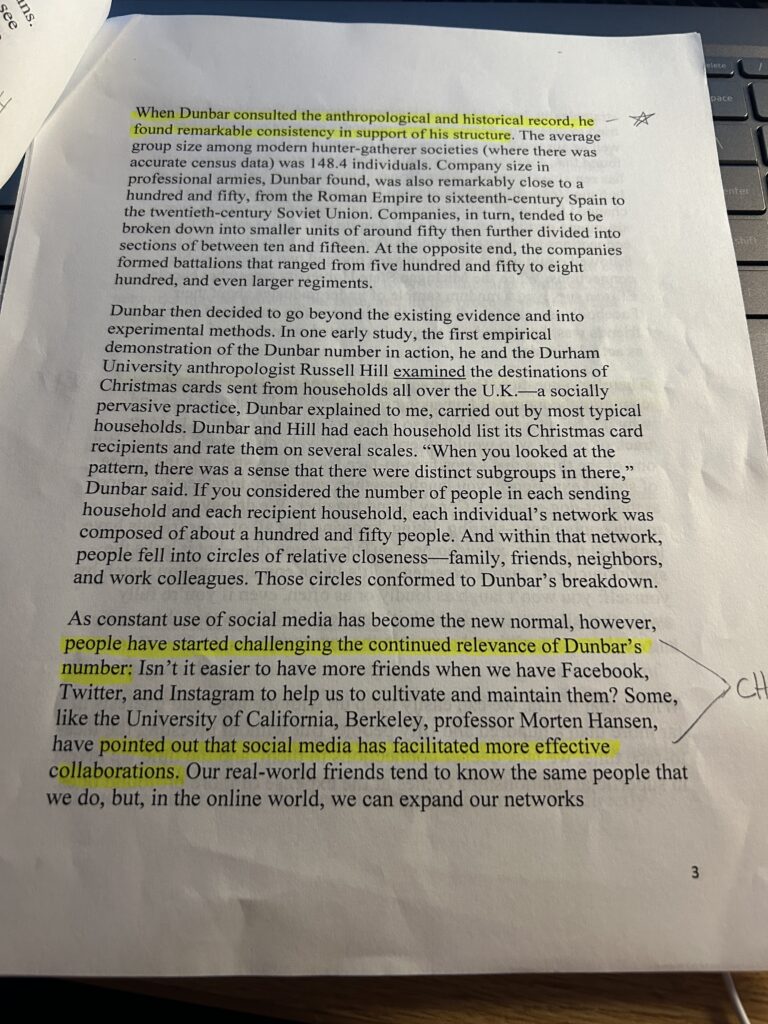
Jumping forward to the “Limits of Friendship” text my notes and annotations became more detailed and focused more on the overall theme/message of the text and less on what stood out in the moment. The image below from “The Limits Of Friendship” reading my annotations not only stand out more but have blurbs on the side relating to specific writing themes. Not only did I underline things as I read the text, but I also went back and made small notes as to why they were underlined. I connected the things I was underlining to the different kinds of annotations like parts of the text I was understanding, parts I was questioning, or parts that push the author’s idea in a further direction. Doing this made it clearer as to why these parts of the text were underlined. Not only were these notes clearer as to why they were underlined in the first place, but it also made it easier to go back and reference them. For example, in “The Hawk” reading the only notes that I did were brief, underlined portions of the text that didn’t have any explanations to explain why they were underlined. But looking at my notes from the “Limits of Friendship” the parts that I underlined had specific annotation labels next to them that I could look back at and know why they were important.
Looking at my notes from “The Hawk” reading up until the limits of friendship reading it’s clear that more detailed, organized notes/annotations are needed for understanding the text. Not only are more detailed notes used for understanding the text better, but it also makes it easier to look back at those notes to help in future writing assignments and to connect themes of previous readings to current ones. As shown in the two pictures below the difference is not only clear in the detail of what in the readings was specifically underlined; but the method of which I pointed these parts of the reading out were different visually as well.
“Limits of Friendship” reading notes
